


Master in Neuroarchitecture and Conscious Design
Key Data
- Start: October 19th 2026.
- End: August 1st 2027.
- Certificate: Master's degree issued by Elisava and University of Catalonia (UVic-UCC).
- ECTS Credits: 60.
- Methodology: Online.
- Language: English.
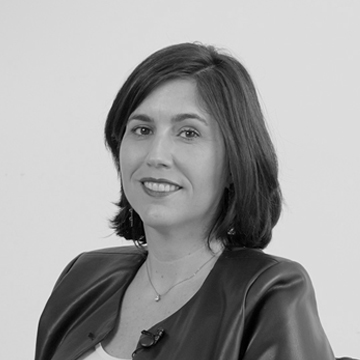
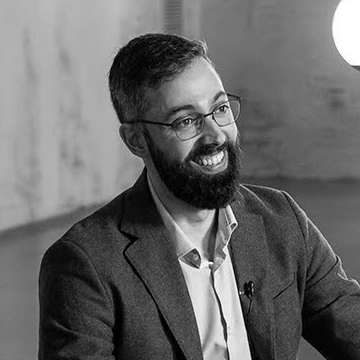
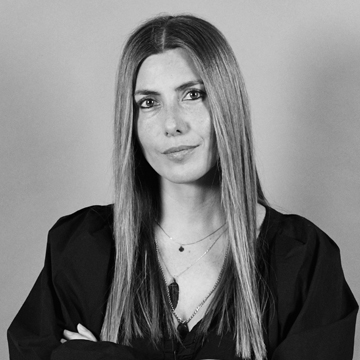
- Direction: Alba Méndez and Andrea de Paiva.
- Limited seats.
Presentation
Master in Neuroarchitecture and Conscious Design: designing with people’s health and wellbeing in mind
We are living through a psycho-environmental crisis in which climate stress and ecological degradation are deeply intertwined with mental health, loneliness, fatigue and a lack of meaning. This reality directly affects how we sleep, work, learn and relate to the spaces we inhabit.
In this context, neuroarchitecture offers an approach that integrates scientific knowledge about the brain, the body and behaviour into the design process. Applying neuroarchitecture makes it possible to create environments that foster self-regulation, emotional balance and a deeper connection with oneself, with others and with nature.
The Master in Neuroarchitecture and Conscious Design focuses on how design impacts people’s bodies and minds, understanding space as an active variable of intervention. Through environmental psychology, neuroscience, ethnography, usage data analysis, post-occupancy evaluation and measurement tools, you will learn to make more conscious design decisions based on scientific evidence.
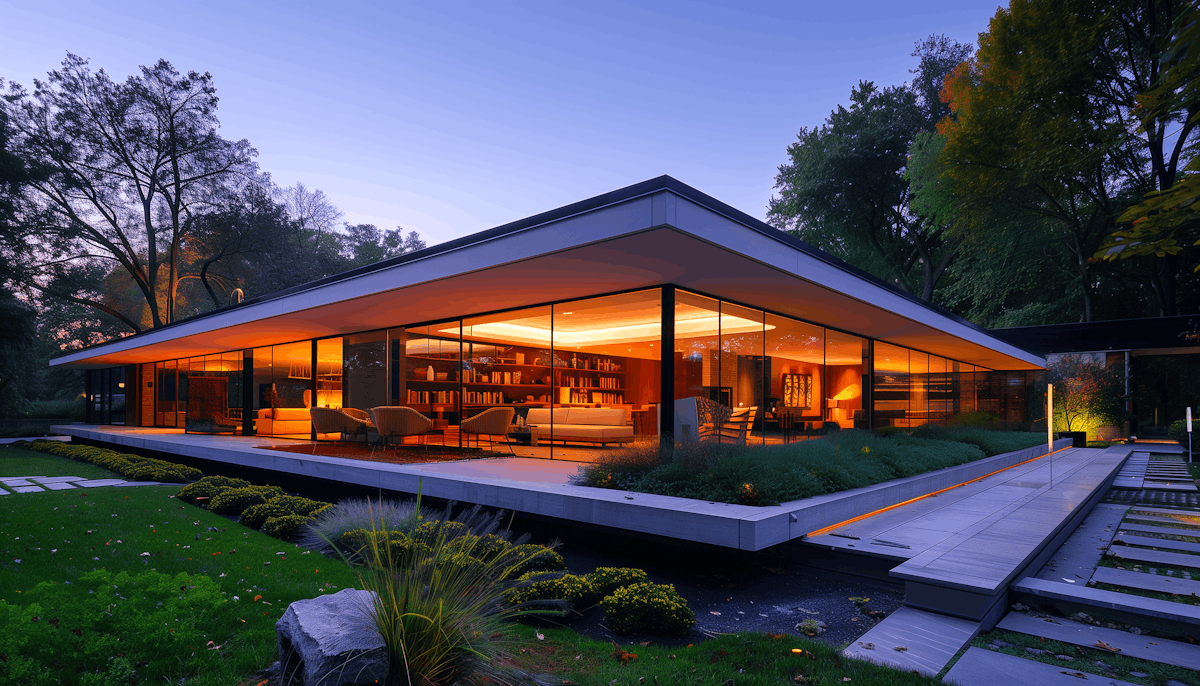
Supported by the Center for Conscious Design, a leading authority in creating conscious spaces that prioritise user wellbeing, the aim of the Master in Neuroarchitecture and Conscious Design is to connect design with science, technology and philosophy, in order to understand the lived experience of space from within, relating it to the processes of the nervous system. In this way, you will learn how environments influence our perception, behaviour and wellbeing.
Objectives
With the Master in Neuroarchitecture and Conscious Design you will learn to:
- Understand the historical evolution of Neuroarchitecture, identifying key research and benchmark strategies.
- Structure the process in phases using evidence-based design methodology and translating scientific findings into design strategies and patterns.
- Research people, contexts and stakeholders to characterise the context, synthesise it into maps and matrices, and build user profiles and multisensory journeys.
- Develop, prototype and document design proposals, and be able to explain and present the multisensory qualities of the project.
- Apply principles of social impact reporting related to the built environment, connecting design projects with metrics and indicators of social impact, wellbeing and equity.
- Develop critical and ethical thinking around the practice of neuroarchitecture, addressing inclusion, diversity, accessibility, data protection, the use of AI and the risks of “neuro-washing”.
- Analyse international laboratory models —their dynamics, protocols and infrastructures— to identify opportunities and limits for applied research.
- Develop and carry out studies that connect the full chain: evidence–decision–impact.
Contents
The Master in Neuroarchitecture and Conscious Desig is structured into the following modules:
- Foundations of neuroarchitecture and conscious design practice.
- Historical evolution and theoretical frameworks of neuroarchitecture and conscious design.
- Mind, body and space: fundamentals of spatial experience and fields of action.
- Understand: people, context and system.
- Define: objectives, hypotheses, data and evidence.
- Ideate: from challenge to design strategy
- Implement and evaluate: prototypes, iteration and Post-Occupancy Evaluation (POE).
- Critical synthesis, social impact and the professional role in neuroarchitecture.
- International LAB Workshop.
- Final Project.
Additional resources
In addition to the specific contents of the Master in Neuroarchitecture and Conscious Design, you will enjoy a series of advantages designed to enhance your learning and connect with the creative community:
- 70% discount on the Adobe Creative Cloud© annual licence, so you can explore and create with the best tools in the sector.
- One year’s access to Elisava Alumni Bold, a community made up of students and alumni of the school.
- Two free creative pills, focused on tools and methodologies related to the world of creation and design.

Who it is aimed at
The Master in Neuroarchitecture and Conscious Design at SHIFTA is aimed at a wide range of profiles:
- Graduates in design, architecture or product engineering.
- Design professionals working at the intersection of design, health and human behaviour.
- Professionals from the fields of health and behavioural sciences —such as psychologists, occupational therapists, healthcare or rehabilitation professionals— who are interested in understanding the environment as a complementary tool for intervention and prevention.
- Social science professionals —such as sociologists, anthropologists or social educators— interested in analysing and improving the impact of the environment on wellbeing, social cohesion and the mental health of the population.
Career opportunities
After completing the Master in Neuroarchitecture and Conscious Design, you will be able to work as:
- Designer specialising in neuroarchitecture and conscious design.
- Consultant in user experience–centred design for built environments.
- Consultant in Post-Occupancy Evaluation (POE).
- Specialist in assessing the impact of the built environment on people’s wellbeing and performance.
- Adviser in the design of therapeutic, healthcare, educational or cognitive-decline environments.
- Specialist in innovation applied to the built environment.
- Coordinator of pilot projects and living labs.
- Collaborator on applied research projects on space, wellbeing, cognition and mental health.
Methodology
- Our methodology is 100% online, providing the flexibility to combine training with the rest of your professional and personal responsibilities.
- Methodological model supported by the rigor of Elisava and the University of Vic - Central de Catalunya.
- Methodology based on Learning by Doing with the realization of real projects.
- Flexible model that combines synchronous and asynchronous training.
- Weekly live video conferences with teachers from 6:30 p.m (CET).
- Recording of live sessions to view them later.
- Personalized monitoring and tutoring by a specialized team.
Faculty






Admission process
The entry requirements for the Master in Neuroarchitecture and Conscious Design are as follows:
- University degree. If you do not have a university degree, you can gain access by demonstrating professional experience in the sector.
- Computer and good internet connection.
- Be an efficient, planned and autonomous learner.
Methods of payment and financing
From SHIFTA, we offer you the following forms of financing so that the economic aspect is not an impediment.
Single payment
If you pay for the master’s degree in cash, you will receive a 5% discount on the final price.
Own financing
We offer you the possibility of financing the master’s degree in up to 10 monthly installments at no financial cost (0% TAE).
Bonus for companies
You can finance your training thanks to the bonuses offered by the State Foundation for Employment Training (FUNDAE) and the Tripartite Foundation to Spanish companies to train their workers. In this case, we have the support of an external consultancy specialized in this process.