The power of metaphors in storytelling
Metaphors link abstract concepts to recognisable images
One of the most effective resources to achieve this is the use of visual metaphors, because they allow us to communicate ideas, thoughts and even emotions and states of mind in a visual way that the audience can easily understand.
Metaphors help us explain a complex concept by comparing it to a similar but more concrete element. If a character is very sad, we might show them “drowning in a sea created by their own tears”. We are communicating that their sadness is so intense that they experience it as if it were a sea surrounding them, a sea they cannot escape from.
Creativity in its purest form
An image can convey meaning without the need for explanations
Thanks to associations, we can convey meaning without needing verbal explanations. For example, if we want to show that our protagonist is suffering, it is far more effective to represent their state of mind visually than simply having them say, “I’m very sad”. This does not mean that words are less important, but that combining them with powerful visual imagery makes the narrative much more impactful and emotionally immersive.
If we continue with the previous example, we can imagine that character crying, and their tears growing and growing until they become a sea. Since their sadness is not fleeting, but something we have decided is deep and very painful, we can add elements such as storms, lightning and a tiny raft adrift among huge waves or sharks, intensifying more and more that feeling of suffocation.
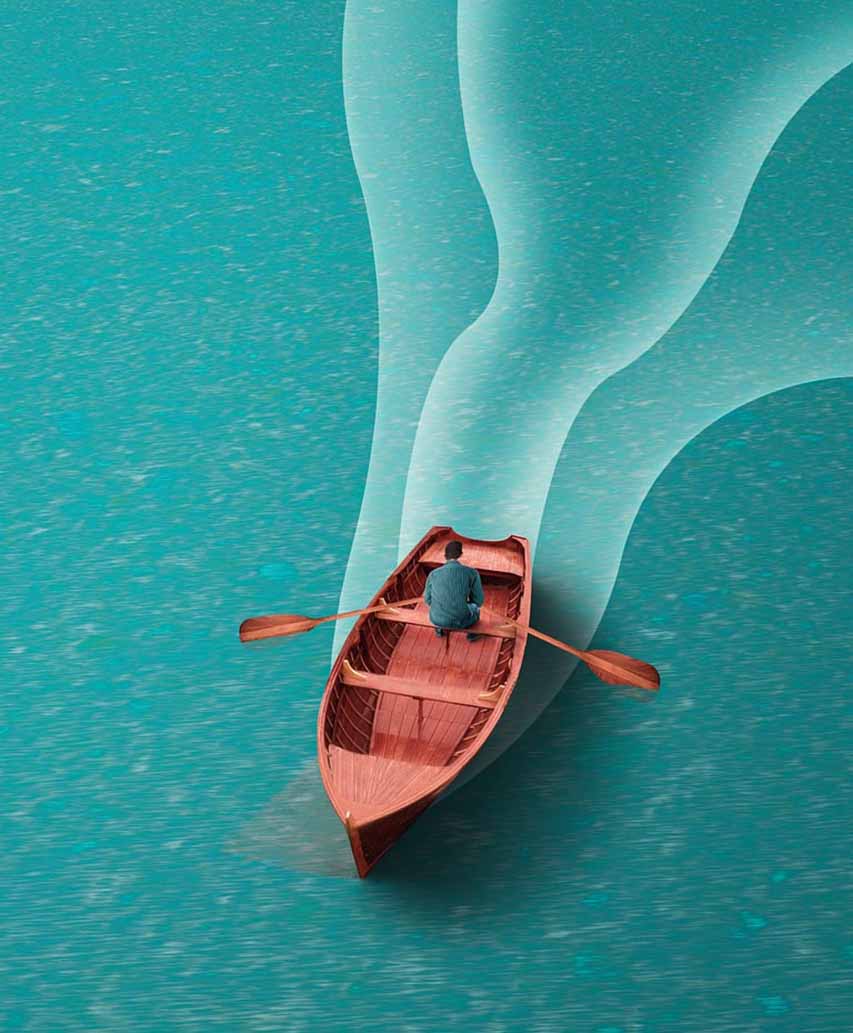
What do visual metaphors allow us to achieve?
The brain remembers images better than words, so using visual metaphors not only boosts understanding, but also helps the message stay with us for longer.
- We make understanding easier by turning abstract ideas into clear images.
- We generate greater emotional impact because we connect with the viewer on a deeper level.
- We enable the audience to feel what the character feels.
- We simplify what is complex.
Types of visual metaphors
Let’s look at several ways of building visual metaphors that can inspire you:
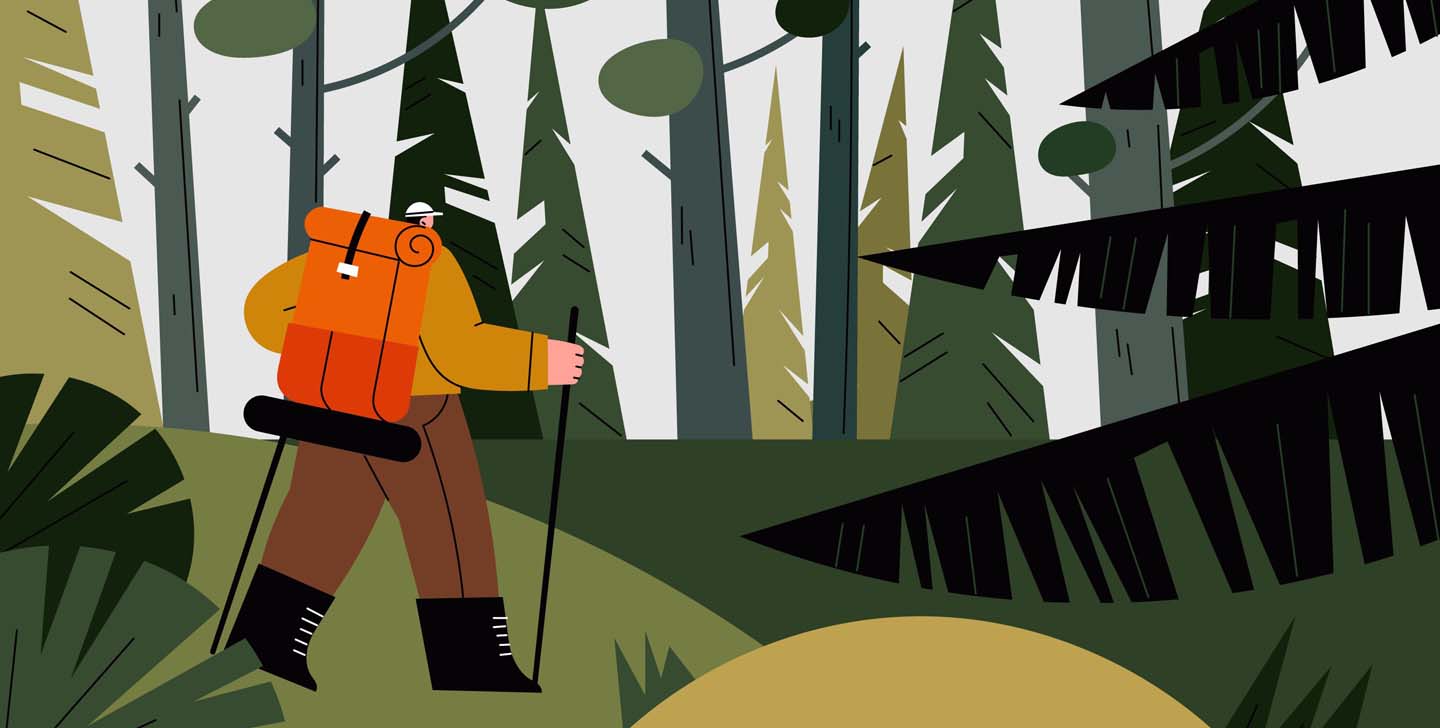
- Substitution: We replace one concept with another of similar meaning (e.g. climbing a mountain as a symbol of effort).
- Transformation: An object changes shape over the course of the story and becomes something else (e.g. tears transforming into the sea).
- Combination: Two different elements are brought together to create a new message (e.g. an eye made of clocks to symbolise an obsession with time). The clock does not replace the eye; together they generate a new concept.
- Movement: Movement itself also conveys an additional message (e.g. going downwards can symbolise despair; climbing a mountain at an ever-increasing speed can symbolise the hope of being close to success, and so on).

How to apply metaphors in Motion Graphics
- Understand the core message
Before you start designing, it is essential to identify the main message you want to get across. What do you want to say with your film? What is the central conflict and emotion? Will you use it for your character, for the world where the story takes place, or both? - Associate ideas
Do a brainstorming session around visual elements that could represent your concept. Don’t settle for the first idea that comes to mind – keep pushing it further. - Choose metaphors people will understand
Metaphors should be easy to relate to your message and should reinforce the narrative, not distract or confuse. - Use them creatively and in moderation
Avoid overusing metaphors, as this can exhaust the viewer. Select the most appropriate one and make it powerful.
Visual metaphors are a great tool in Motion Graphics for conveying ideas in a clear and memorable way.
As I always say, in Motion Graphics our creativity has no limits. Whatever you imagine, you can create. Whatever you feel, you can bring to life on screen.