Why Do Cities Need an Identity?
In today’s hyper-globalized, visually driven, and fiercely competitive world, cities can no longer rely solely on their history or geographic coordinates. They have to know how to tell their own story: what makes them one-of-a-kind, what values they stand for, how they want to be seen by visitors and locals alike. They need a narrative that sets them apart and captures both who they are right now and where they’re headed.
A clear, well-defined identity helps a place position itself to attract tourism, investment, and talent. Just as importantly, it strengthens local pride and a deeper sense of belonging. When people recognize themselves in their city’s story, the bond grows stronger. A more aware, cohesive community emerges.
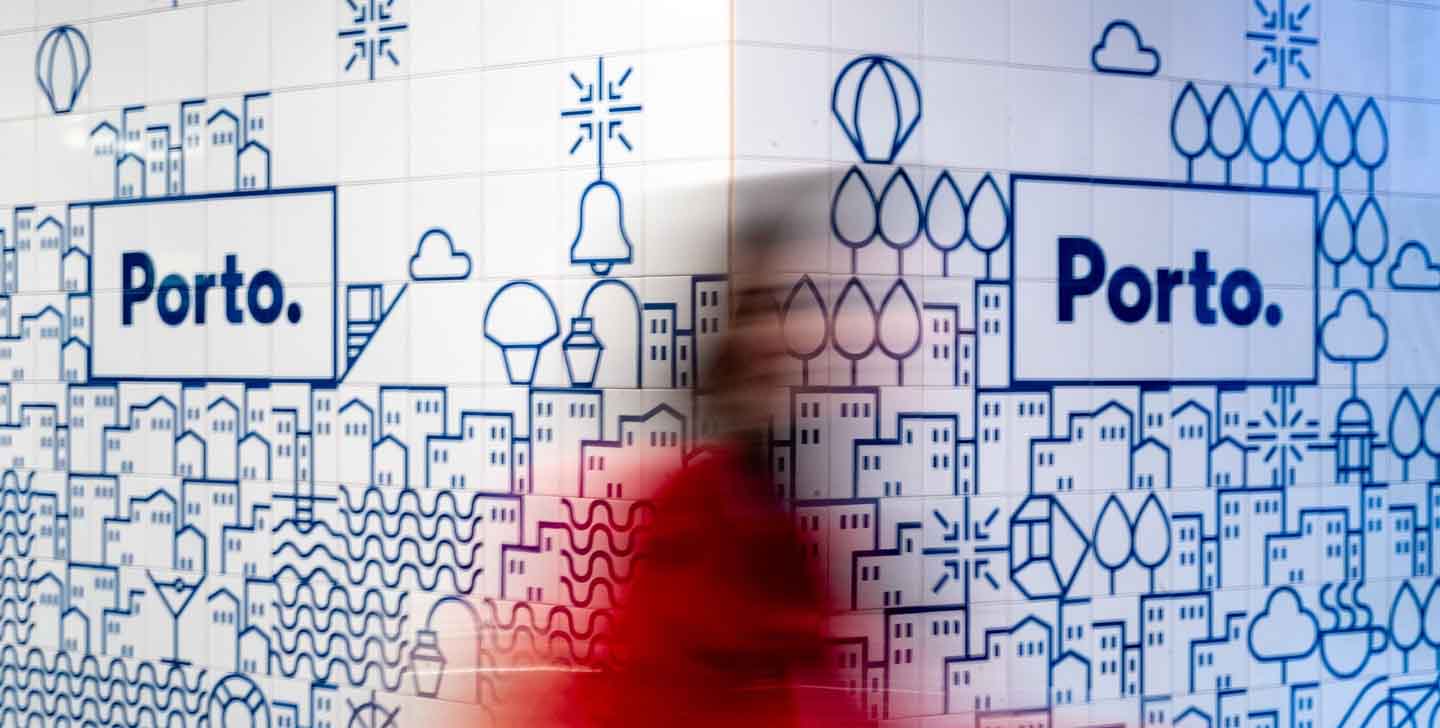
A standout example is Porto (Studio Eduardo Aires, 2014). The Portuguese city built a visual identity that’s strong, adaptable, and instantly recognizable while deeply respecting its heritage. Drawing from the urban landscape, its people, its patrimony, and local culture, the goal was to present an open, globally minded city that’s quietly proud of its singular character. Yet Porto isn’t experienced the same way by everyone. Each resident lives and interprets it differently. The identity needed to reflect that diversity.
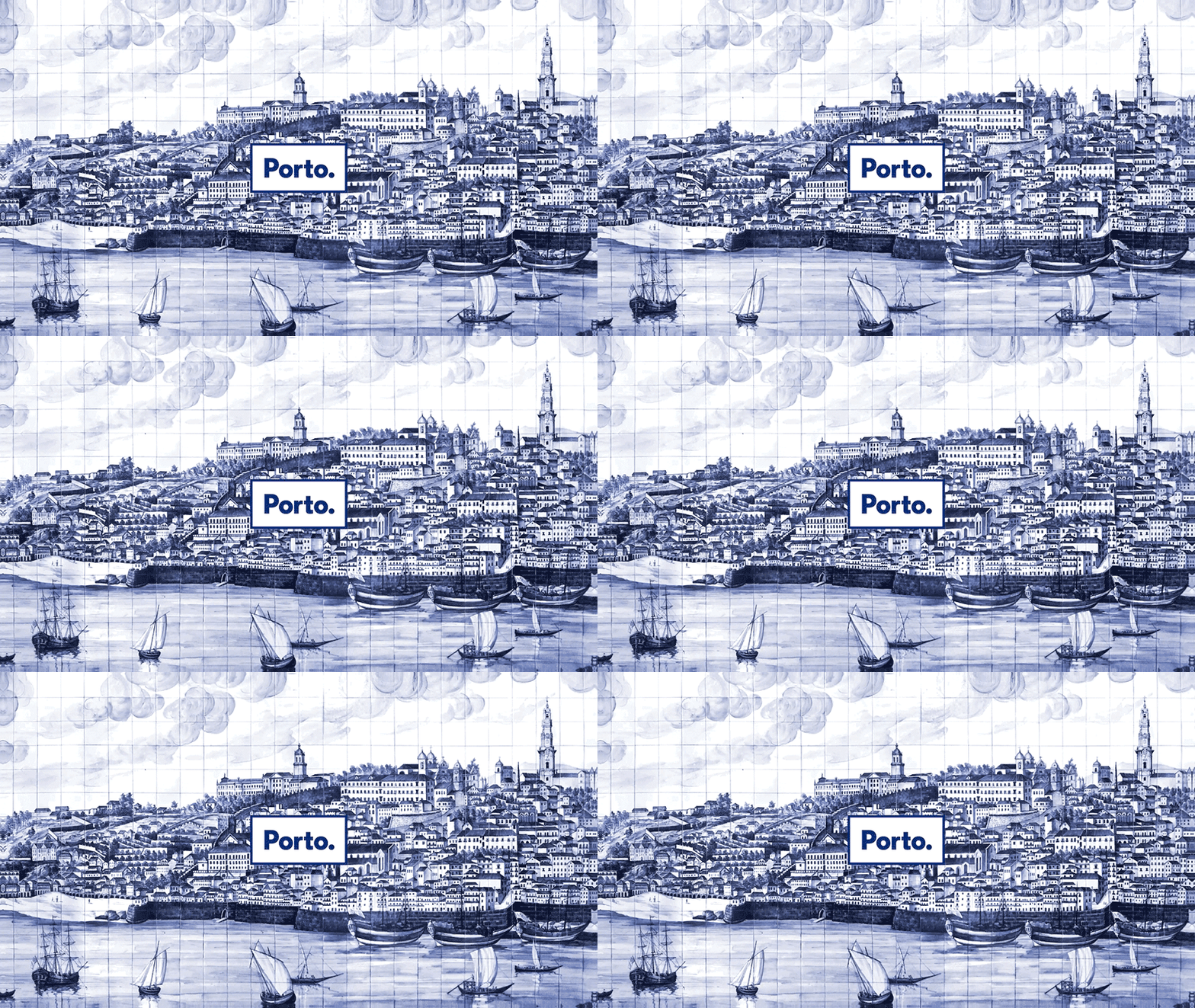
The solution was a modular visual system inspired by the traditional azulejo tiles that adorn so many historic buildings. The new icons form a living language. One that can evolve, adapt to new contexts, and keep telling Porto’s story over time.
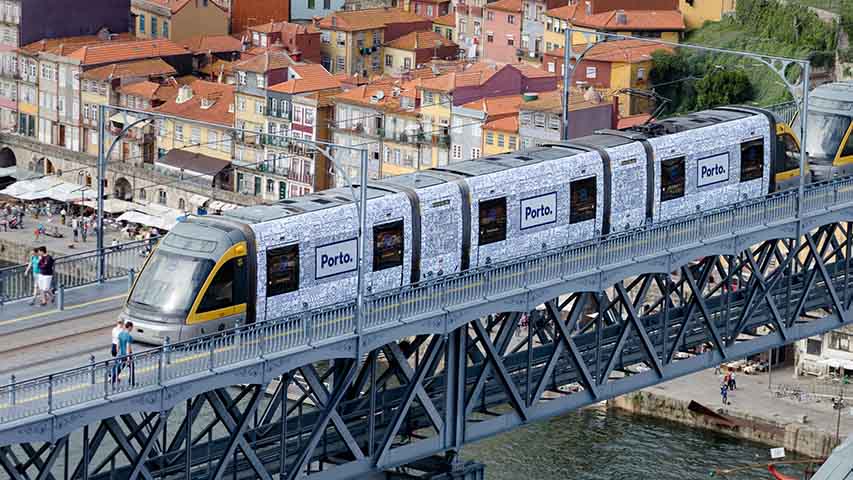
Since its launch, the Porto brand has become part of the city’s fabric: on public transport, uniforms, signage, street furniture, and cultural events. It’s woven into the everyday urban landscape, bridging tradition and modernity, past and future, in a design that speaks fluently to both locals and visitors.
From Narrative to Visuals: How a Brand Translates into Graphic Design
A city’s identity doesn’t start with design. It starts with the story. Before anyone sketches a logo, picks colors, or chooses typefaces, the city must clarify what it wants to say: its core values, its personality, its vision for tomorrow. That narrative, whether framed as a manifesto, a strategy, or pure storytelling, gives meaning to everything that follows.
Graphic design steps in as the visual translator of that story. Its job isn’t to decorate. It’s to shape, unify, and make visible an identity that already exists in the social, cultural, and symbolic life of the place. Through complete graphic systems (logos, color palettes, typography, icon sets, overall visual language), it creates a recognizable image that distills the territory’s essence.
A more recent case is Sevilla’s city brand (Lugadero, 2022). The project began with active listening and real participation. Through conversations and involvement, key elements surfaced: the warmth of the people, the quality of the light, the rhythm of life, and the depth of its cultural heritage. Those became the pillars of the brand narrative.
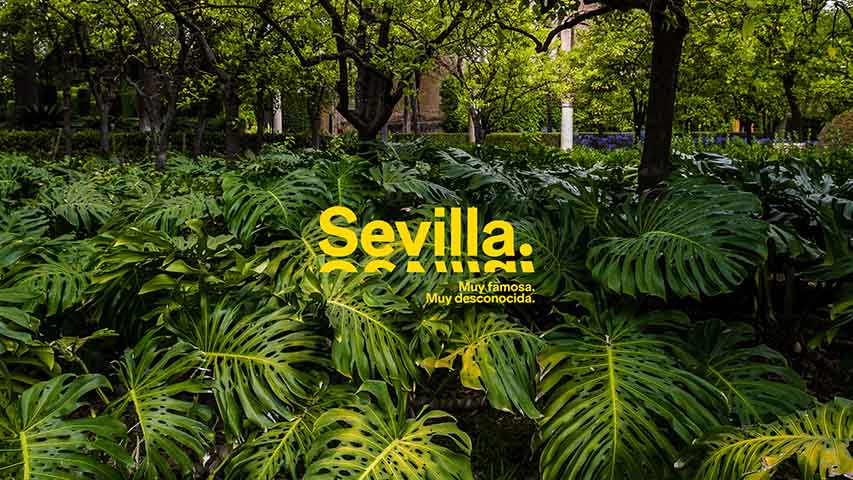
The design revolved around one of the city’s most symbolic traits: its light.
Light became both the conceptual and visual foundation. The isologo features the word “Sevilla” with its shadow acting as an isotipo, cast partially at a 76-degree angle.
That angle isn’t random. It matches the sun’s inclination during the summer solstice in the city and serves as the unifying thread throughout the entire visual system.

The graphic language builds on the interplay between light and shadow, tradition and innovation, to convey a Sevilla that’s looking forward while staying rooted in its history. The diagonals bring energy, flexibility, and layered symbolic meaning.
Meanwhile, the claim “Muy famosa. Muy desconocida” (“Very famous. Very unknown”) captures the desire to move past stereotypes and reveal the city’s true, multifaceted character. It’s an invitation to look with fresh eyes, to rediscover a Sevilla that’s plural, complex, and always evolving.
This is a brand built not just to be noticed, but to spark connection, pride, and belonging.
Making the Identity Visible: How a City Communicates Every Day
A visual identity doesn’t live in a brand manual. It lives in application. Its strength and authenticity are proven through consistent use across every touchpoint: public spaces, digital channels (websites and social media), events, and official materials. Coherence in execution is what keeps the underlying story alive.
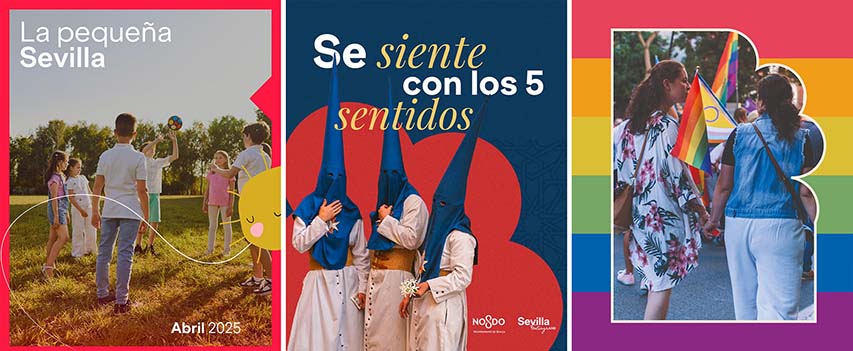
Returning to Sevilla, you can see on its official tourism website and social channels that the brand is no longer applied as originally designed.
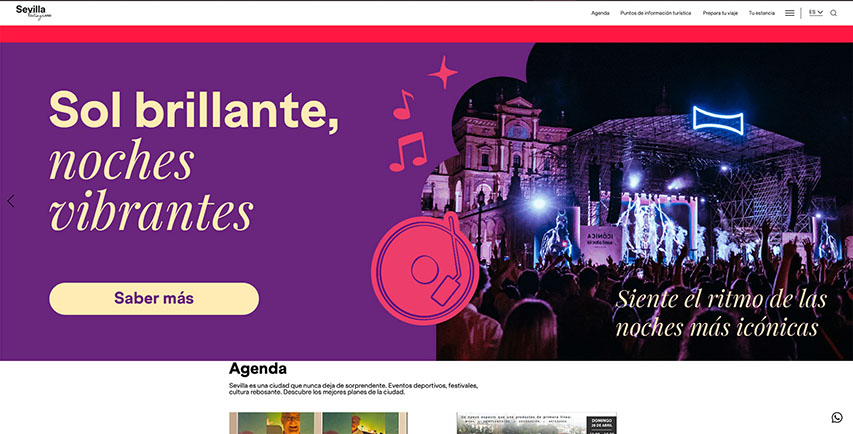
The logo no longer casts that defining diagonal shadow that held the system together; the claim has been replaced (in this case, as part of the Fitur 2025 tourism campaign), now paired with different typefaces; and the diagonal motif has given way to new graphic shapes whose connection to the original narrative isn’t explained.
These choices might look appealing on their own, but they sever the link to the thoughtful, symbolic reasoning behind the brand. An identity born from careful, participatory storytelling risks turning into a collection of disconnected visuals. It loses memory and context. Design stops communicating a shared vision and becomes an empty image, stripped of the depth that gave it meaning.
Changes like these don’t just impact aesthetics. They erode perception, coherence, and trust. When the identity drifts away from its founding narrative, it loses its power to generate recognition, belonging, connection, and credibility. Design stops being a strategic tool and becomes mere decoration, unable to sustain a solid, enduring story about what the city is, what it stands for, and what it aspires to become.
The Danger of an Empty Brand
In recent years we’ve seen too many institutional brands created without citizen input, without serious strategic groundwork, or without genuine ties to the place they’re meant to represent. The outcome? Generic, context-free identities that could belong anywhere. Logos that build no story and inspire no identification.

Cantabria’s new Cantabria Infinita brand (C&C Publicidad, 2024) launched last year aiming to “adapt to new communication formats and gain versatility.” Yet beyond the logo and symbol, no complementary graphic system was defined to allow coherent development across formats and contexts. The proposal lacks solid visual reasoning: the graphic decisions aren’t explained or linked to Cantabria’s cultural, symbolic, or territorial character.
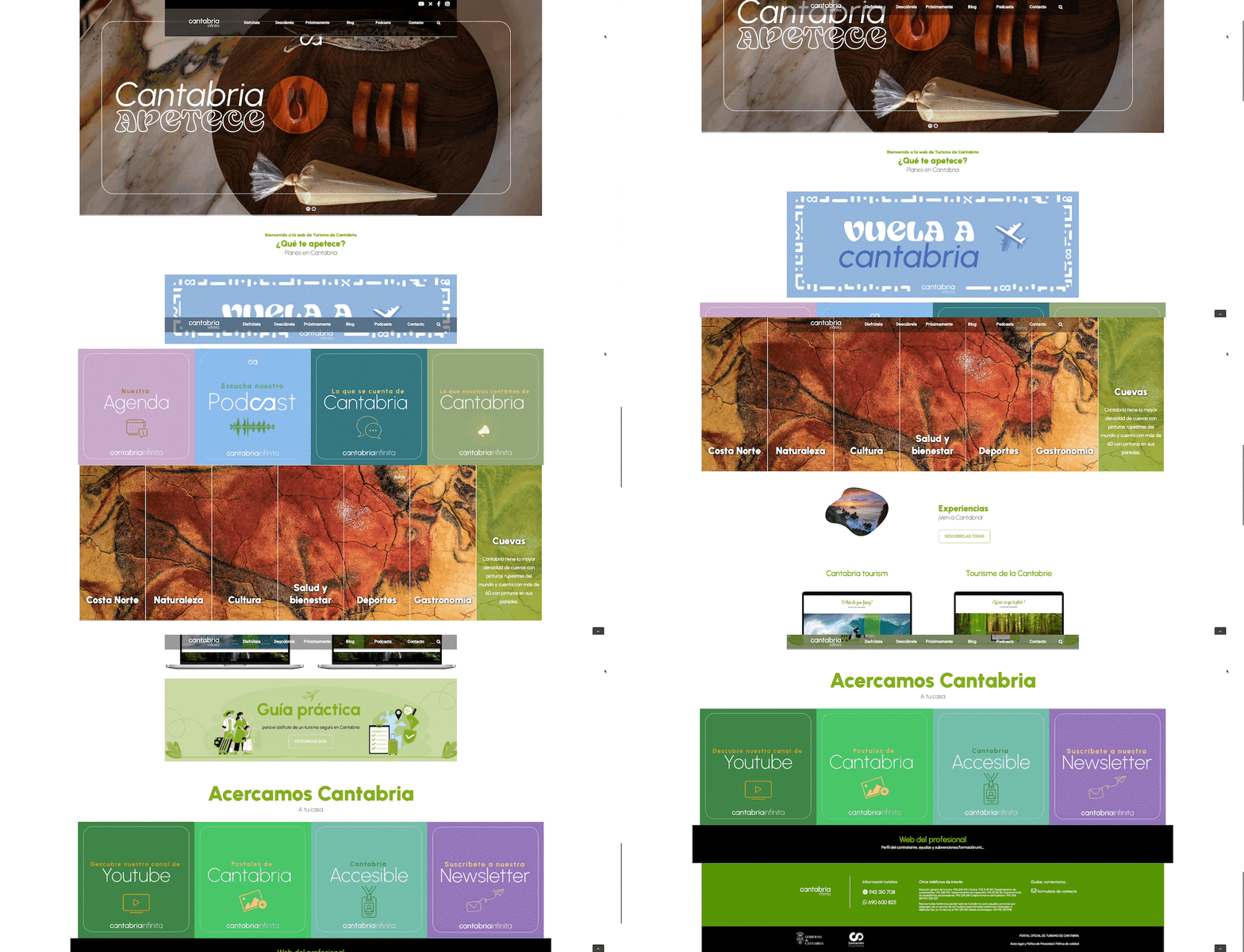
There’s also no shared branding strategy or implementation plan that ties together institutional, tourism, and promotional uses. Without a narrative backbone or a functional visual structure, the brand becomes superficial. It is incapable of building long-term recognition.
Decisions like these aren’t just missed opportunities. They wear down institutional credibility and make it harder to forge lasting bonds between people and their place. When identity is reduced to a logo and strategy to surface-level aesthetics, design turns into a superficial fix. The real emptiness isn’t in the design. It’s in a city that hasn’t figured out how to tell its own story with clarity and conviction.
City Branding Is About Designing Shared Identities
As we’ve seen, city branding is a profound act of collective identity-building. It’s about crafting symbols, stories, and experiences that reflect who we are, how we see ourselves, and, most importantly, how we want to live together and project ourselves into the future.
It’s no longer just about form or color. It’s about whether that image can truly represent a community’s diversity, history, and ambitions. A carefully considered visual identity has the power to shift how we perceive our place and deepen our connection to it.
But building a city brand isn’t only a design task. It demands interdisciplinary collaboration: politics, culture, urban planning, and above all, people. Only through real involvement can it capture the living, breathing reality of those who call the place home.
That’s why the future of city branding hinges on collaboration, genuine listening, and shared commitment. Because in the end, a city brand isn’t dictated from above or created in isolation. It’s built with and for the people who live there. And that shared meaning is what gives it real value and lasting power.