How Our Environment Sculpts Who We Are
Not everything we become is written in our genes. As neuroscientist Francisco Mora points out, we are born with a unique genetic “book” — but it’s only a draft. It is the environment — physical, familial, and social — that acts as the chisel: shaping, reinforcing, or weakening our brain architecture, and ultimately sculpting who we are and how we perceive the world.
Put simply: every experience leaves a mark on the mind and the body. That’s why the environments we design are never neutral. They actively participate in writing that book.
This is the context in which neuroarchitecture emerges. Neuroarchitecture is not a trend or a style — it’s an approach that integrates scientific evidence into the design process to understand how the brain and body interact with the built environment, and how that interaction translates into wellbeing, performance, and health.
Conscious Design as a New Paradigm
But incorporating evidence alone isn’t enough. The real paradigm shift doesn’t lie solely in adding data to the design process — it lies in transforming how we understand the role of design itself. This is where the concept of conscious design comes in.
Neuroarchitecture and conscious design are not the same thing, though they are deeply connected. When introduced together for the first time, it’s easy to use them interchangeably. But they operate at different levels and serve different functions within the design process.
Conscious design is not a technique or a specialization — it’s a framework from which design practice is understood. It defines where we design from, what questions we ask, and what responsibility we take on. It pushes us to interrogate the purpose of a project, to ask who we are designing for, and to consider the impact our decisions will have on people, on society, and on the environment.
From this perspective, designing is not simply giving form to a space — it’s intervening in complex systems. It means integrating systems thinking, working from observation and co-creation, and making decisions informed by both evidence and values, ethics, and contextual awareness.
What Neuroarchitecture Can and Cannot Do
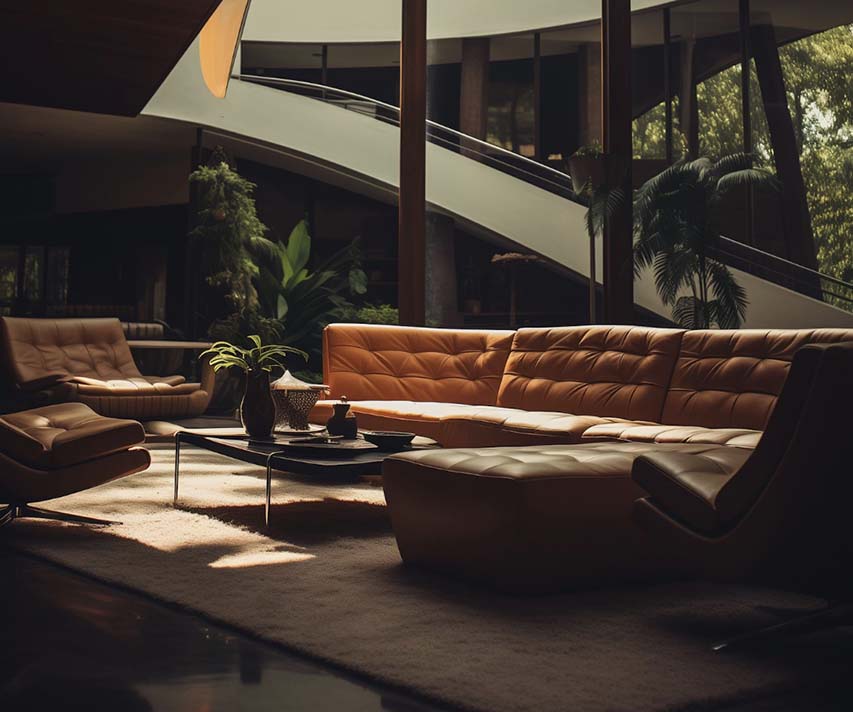
Neuroarchitecture, by contrast, functions as a tool within this framework. Its role is to contribute scientific knowledge about how the built environment influences human experience through its interaction with the nervous system and embodied cognitive processes. It helps us understand how spatial stimuli affect perception, attention, orientation, and stress regulation. To do this, it draws on measurable methodologies that allow us to objectify aspects of experience that have traditionally been considered intangible.
That said, neuroarchitecture on its own is not enough. While it provides valuable information, it doesn’t explain the full complexity of human experience, nor does it resolve how to integrate that knowledge into a holistic design practice. Our experience of places doesn’t depend solely on neurophysiological or cognitive processes — it also involves memory, culture, social relationships, meaning, and context.
Reducing design to what can be measured risks falling into a form of biological reductionism, where the richness of human experience gets simplified to its physiological or cognitive correlates. This approach, while useful at certain levels of analysis, falls short when it comes to addressing the full depth and diversity of lived experience.
That’s why neuroarchitecture needs to be embedded within a broader framework — one that allows that information to be interpreted and translated into meaningful design decisions.
Mind–Body–Environment
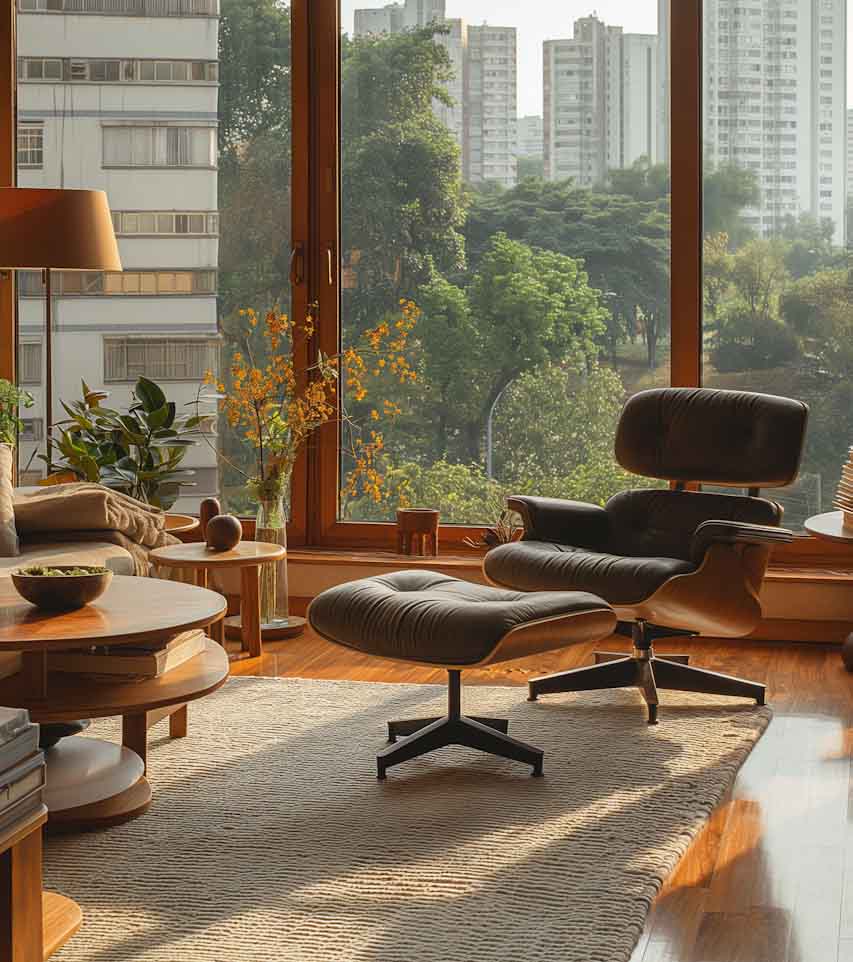
From this perspective, experience is not an abstract concept — it’s a phenomenon that emerges from the interaction between mind, body, and environment. This continuum — Mind–Body–Environment — offers a way to translate the complexity of human experience into an operational framework for design. Designing means consciously intervening in this relationship: understanding how environmental stimuli trigger physiological, cognitive, and emotional responses, and how those responses shape perceptions and behaviors. The project shifts its focus away from form alone and toward the coherence between what a space proposes and what people actually need.
This shift introduces a different logic into the design process. It’s no longer just about defining what a space is, but about what experience we want to create. And this is precisely where design becomes a strategic tool. Because once we can understand experience, we can begin to measure it.
The ability to quantify use, perception, or certain spatial effects makes it possible to move from an architecture built on implicit assumptions to one built on explicit, verifiable hypotheses. Design stops being a closed act and becomes an iterative process — one where decisions can be evaluated and adjusted based on their real-world impact. The challenge isn’t to replace intuition with science, but to integrate the two. Evidence reduces uncertainty, but it is design that translates that information into a coherent and meaningful proposal.

Design as a Lever for Collective Transformation
This approach also makes it possible to connect design with value creation. In a context where sustainability and social impact are increasingly central concerns, linking design to indicators of wellbeing, performance, or health introduces a new strategic dimension. Space stops being a passive asset and becomes a lever for transformation.
But this value isn’t generated in isolation. Architecture is not the exclusive result of the architect’s work — it emerges from the interaction between multiple actors: developers, investors, users, managers, public administrations, academia, and civil society. Each of them influences decisions, shapes outcomes, and participates in the construction of experience.
From this perspective, conscious design takes shape as a collaborative process involving multiple stakeholders, which can be understood as a five-helix system: academia, industry, public administration, civil society, and the environment. Architecture thus moves beyond being an isolated practice and becomes a space of mediation between these agents — where the goal is not just to optimize an individual project, but to align diverse interests around a shared purpose and activate the generation of shared value. This means designing not only spaces, but also the conditions for meaningful relationships between actors.
Designing the World We Want to Inhabit
This shift leads us to understand design as part of a continuum: Design → Performance → Value → Impact. Spatial decisions generate behaviors and experiences (performance), which translate into value and, ultimately, into impact at the organizational, social, and environmental level. This framework doesn’t just help us design better — it also helps justify and scale the value of design in complex contexts.
That said, this field is still being built. There is a real risk of oversimplifying its contributions or applying generic solutions to complex problems. That’s why it’s essential to approach it with rigor, interdisciplinarity, and a clear awareness of its limits.
Ultimately, neuroarchitecture and conscious design are not just a technical evolution of the discipline — they are an invitation to rethink its purpose. In a world shaped by social, environmental, and mental health challenges, the built environment can become an active tool for improving people’s lives. Designing is no longer just about building. It’s about intervening in living systems. And in that sense, every space we create is also a decision about the kind of world we want to inhabit.