A Casual Scroll, a Sunny Beach, and a Bookmarks Counter
The project didn’t start in an academic database; it was sparked by the defining gesture of our era: a mindless thumb-scroll through social media. A home video appeared on Duque’s feed showing parents filming their toddler playing on the beach.
“The comments were completely polarized,” she recalls. “Half the users saw nothing wrong with it, while the other half were sounding alarms over how many times the clip had been saved on TikTok and Reels.”
That detail was an immediate red flag. Duque began pulling at the thread of sharenting—the widespread parental habit of documenting children’s lives online—diving into documentaries, high-profile controversies, and statistics that, as she puts it, “leave a knot in your stomach.”
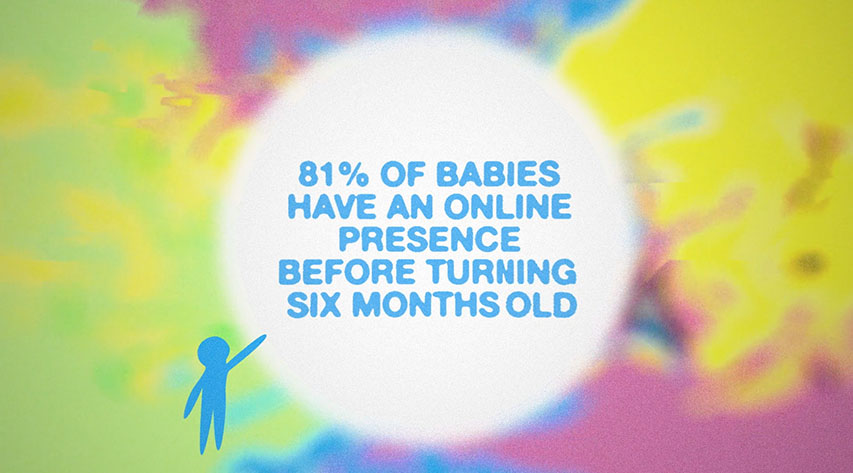
From that moment on, the challenge was as much ethical as technical: how do you address an ecosystem where 81% of infants have a digital footprint before turning six months old, without resorting to cheap moralizing?
“If you tackle this without empathy, the knee-jerk reaction is to point fingers and blame parents for being careless,” Duque explains. “A finger-wagging approach solves nothing. This is still a relatively young phenomenon, so education feels far more constructive: showing reality as it is to make people think twice before hitting ‘share.’ The anti-sharenting conversation isn’t about erasing family memories from the internet entirely; it’s about auditing what gets posted, how often, and behind which privacy filters to safeguard a child’s right to intimacy.”
The World of Vera
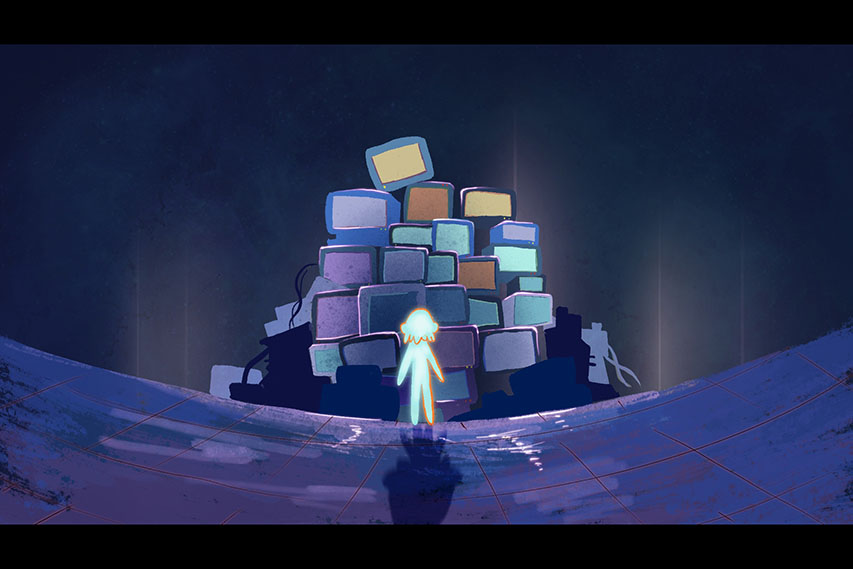
To deliver this message without relying on a conventional documentary format, Duque built a symbolic fable centered on Vera: a translucent, ageless, genderless figure representing the vulnerability of childhood.
“I wanted the character to be as humanoid and streamlined as possible so I could animate fluidly,” she says of the visual development. “From day one, my reference point was Studio Ghibli’s Kodama—figures capable of conveying raw tenderness and innocence without distinct facial expressions.”
Standing against Vera’s fragile transparency is the threat: a dark, razor-sharp silhouette symbolizing monetization, misinformation, and algorithmic danger. “In graphic synthesis, sharp angles work wonders for antagonists; our visual subconscious immediately reads them as hostile,” she notes.
Narratively, the short moves from a false sense of domestic warmth into creeping instability. Framing and pacing fragment as Vera’s identity is duplicated, scaled, and commodified, culminating in a tense climax where the character must confront the force that warped their nature.
Cult Animation Meets Analog Glitch
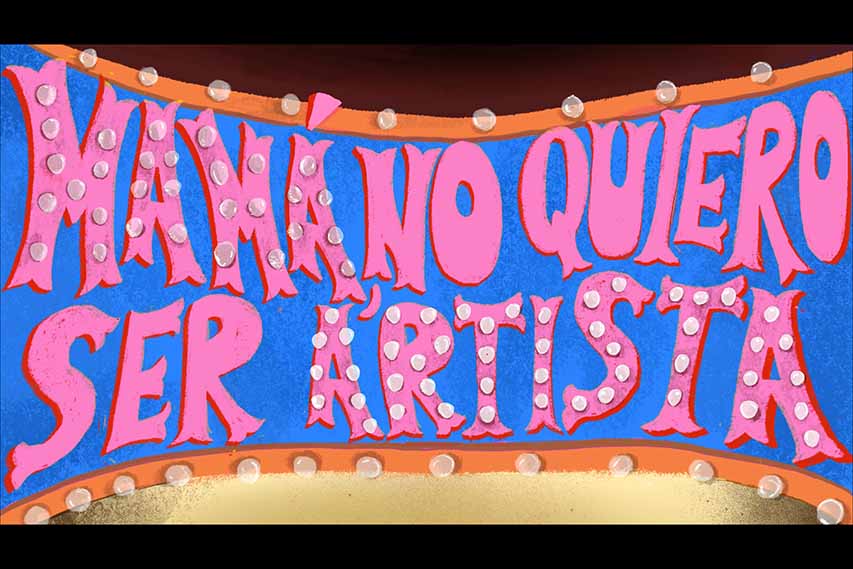
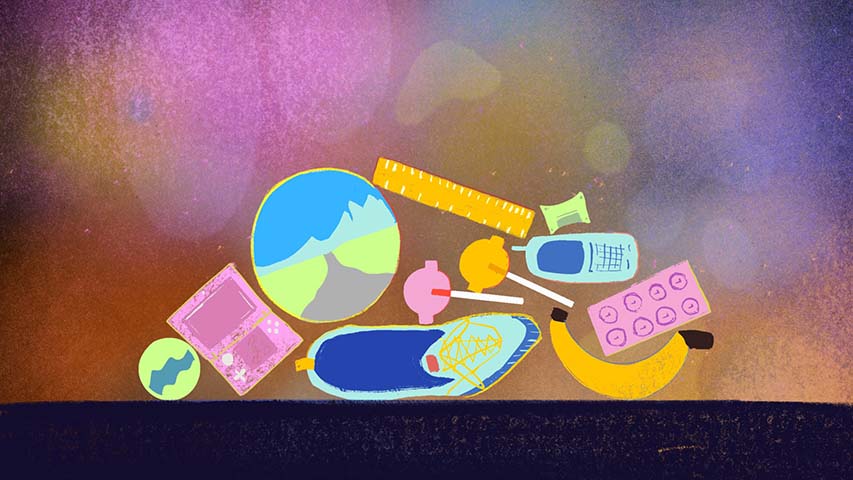
Aesthetically, Mamá, no quiero ser artista pairs sweet character design with a deeply disquieting atmosphere, drawing heavily from two contemporary heavyweights: the lore of Adventure Time and the kinetic, chromatic genius of Japanese animator Masaaki Yuasa.
“Adventure Time was my north star,” Duque says. “It’s brilliant storytelling: behind the surface of a children’s cartoon, it hides complex moral allegories and a vibrant palette—something Yuasa also champions, having directed one of the series’ most iconic guest episodes.”
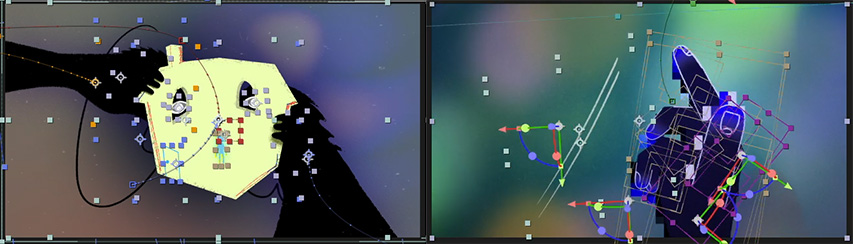
Technically, Duque was determined to break away from the sterile vector look that often plagues digital motion work. She illustrated organic, painterly textures in Procreate before importing them into After Effects alongside custom glitch passes and grain overlays. To ensure temporal shifts felt continuous rather than jarring, she studied the seamless visual grammar of Italian studio Illo: “They have a rare gift for fluid, liquid transitions, taking what begins as a disjointed storyboard and making it breathe as one continuous gesture.”
That balance carries straight into the sound design. Backed by nostalgic 8-bit game tones and reverbs nodding to Tim Kiefer’s work, the short features a first-person voiceover recorded raw and then processed. By shifting the pitch and injecting synthetic artifacts into key phrases, the delivery fluctuates unnervingly between the warmth of a real child and the cold perfection of a digital asset.
Design as a Catalyst for Change
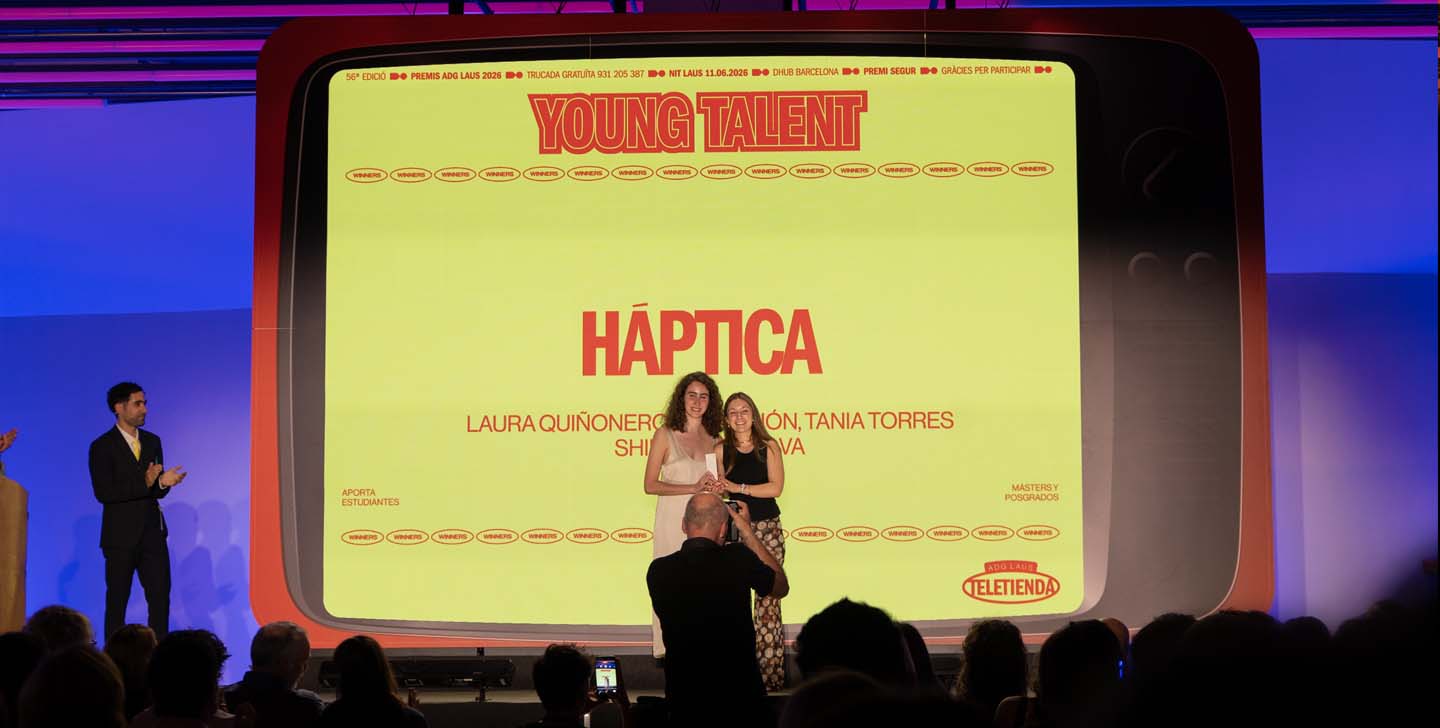
With the Laus trophy in hand and the short gathering momentum across the festival circuit, Duque remains focused on the bigger picture: keeping the conversation alive.
Today, she brings that creative drive to her day-to-day role at Madrid-based agency Plural Branding. “I’m learning a ton about translating motion principles into living brand identities, real-world campaigns, and packaging design,” she shares. And as for what’s down the line? “It’s early days, but I definitely haven’t ruled out the dream of eventually launching my own motion and animation studio in Madrid.”